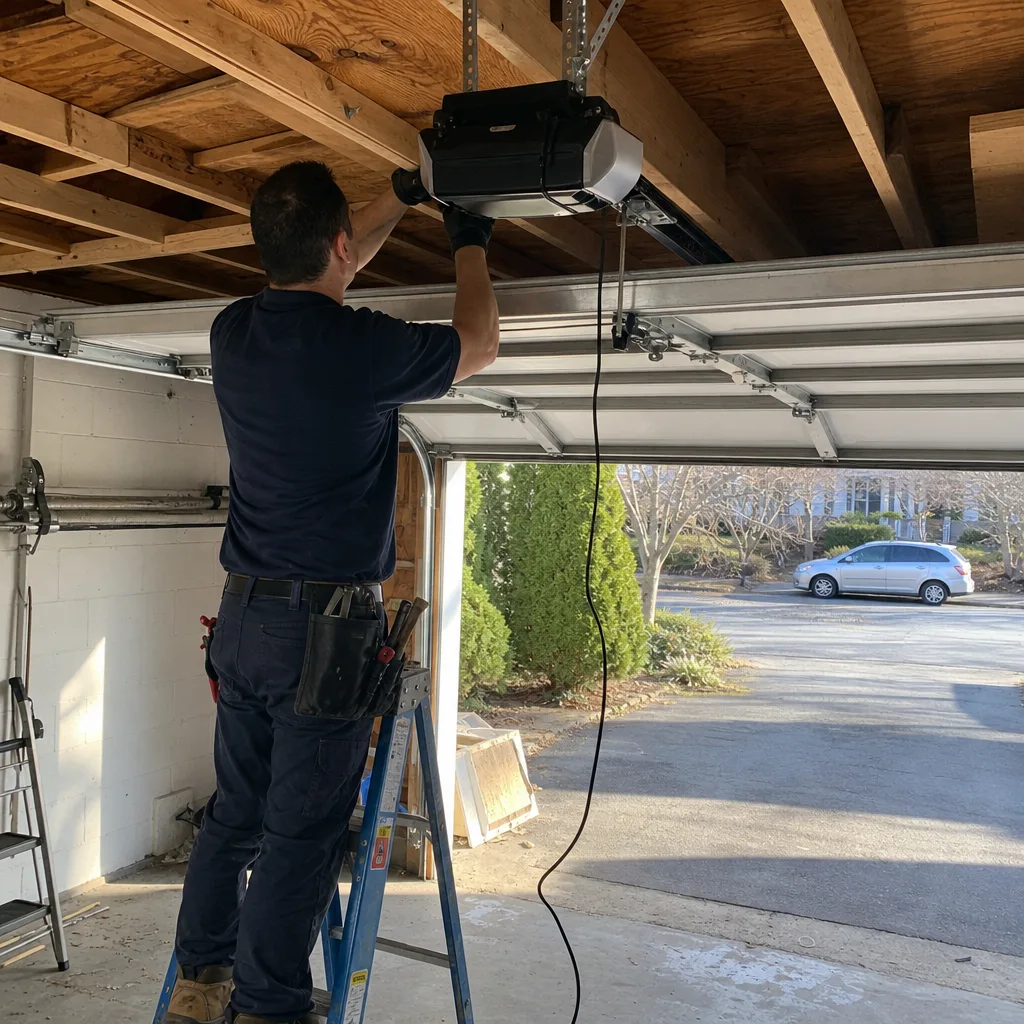
Last updated November 20, 2026
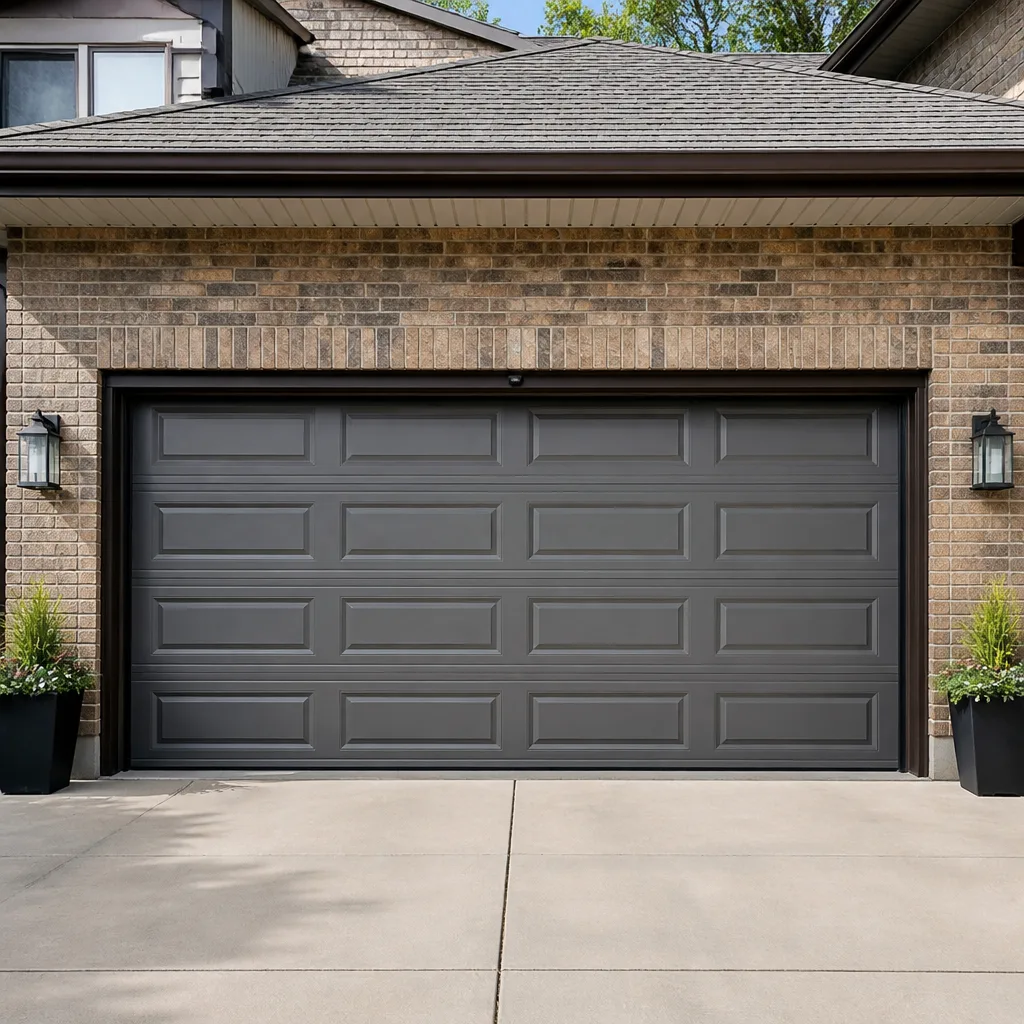 Raised-panel steel
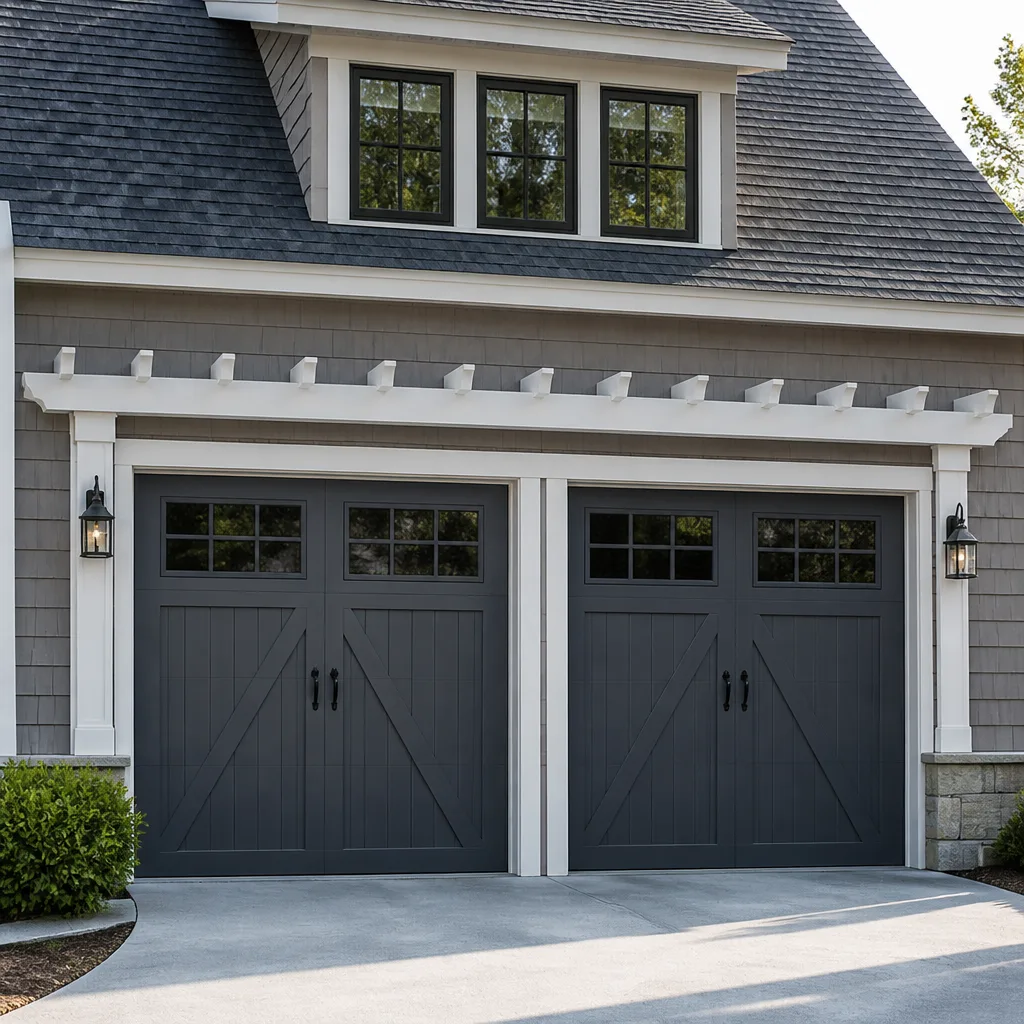 Carriage house
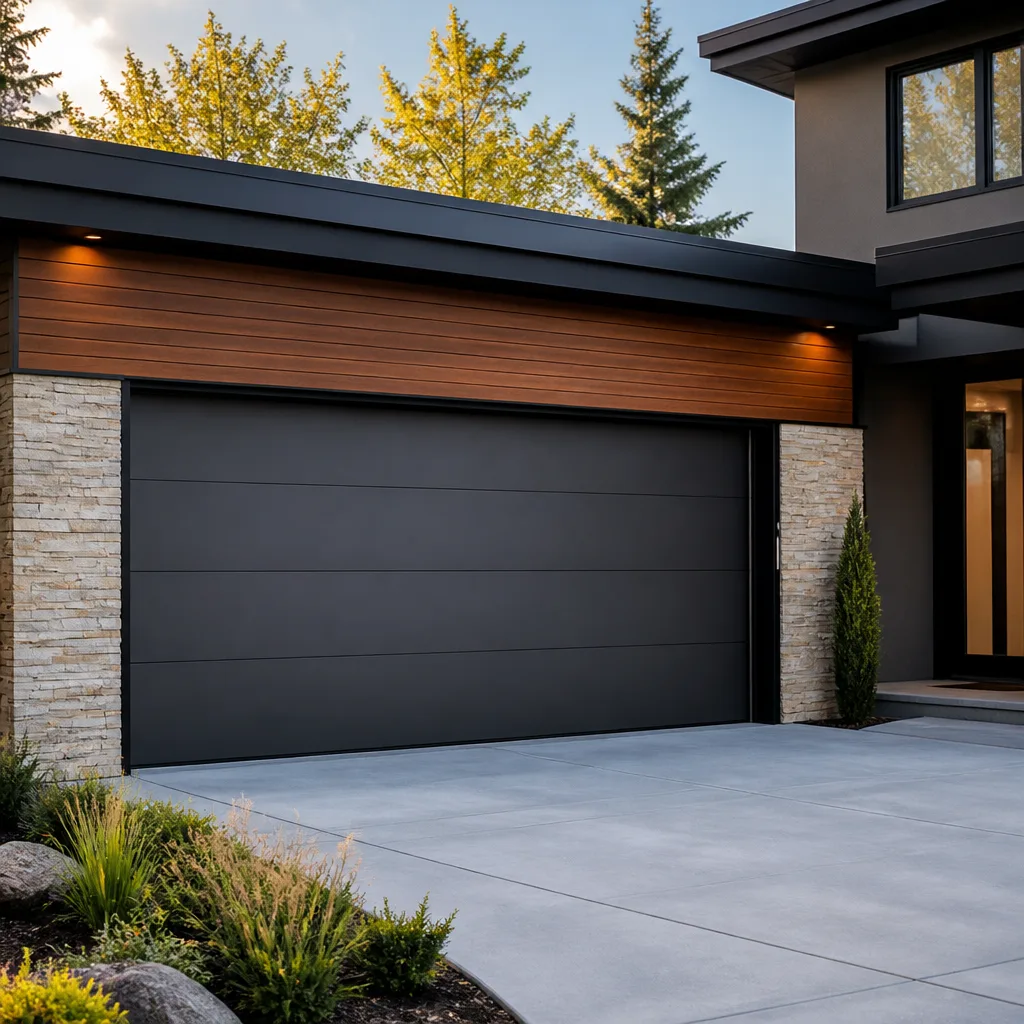 Modern flush
 Full-view glass
 LiftMaster openers
 Chamberlain openers
Full 25-point door and opener safety check with every visit - springs, cables, rollers, tracks, and your LiftMaster or Chamberlain opener included
You get a price before we start. It does not change when the pro arrives.
Get your free estimateGarage Door Warning Signs: A Plymouth Homeowner’s Reference Guide
“My door is loud” is the most common sentence we hear, and it’s also the least useful. That same complaint can point to a dry hinge, a failing roller, a worn bearing plate, or a torsion spring that’s about to let go, and every one of those needs a different fix. A noise is a symptom, not a diagnosis. This guide does what a phone call can’t: it pairs each warning sign with the specific component behind it, so you can describe what’s happening in Plymouth accurately and know whether you’re looking at a five-minute adjustment or a job that should stop today.
Quick Answer
Garage door warning signs fall into three groups: sound (grinding, squealing, popping), movement (slow travel, uneven descent, reversing mid-cycle) and visual (bent panels, frayed cables, gaps at the floor). Loud popping or a door that won’t hold open usually means a broken torsion spring and the door should stay closed until a professional looks at it. Grinding and squealing usually mean worn rollers, hinges or bearings and can be scheduled before they spread.
Styles & brands we work with
- Raised-panel steel
- Carriage house
- Modern flush
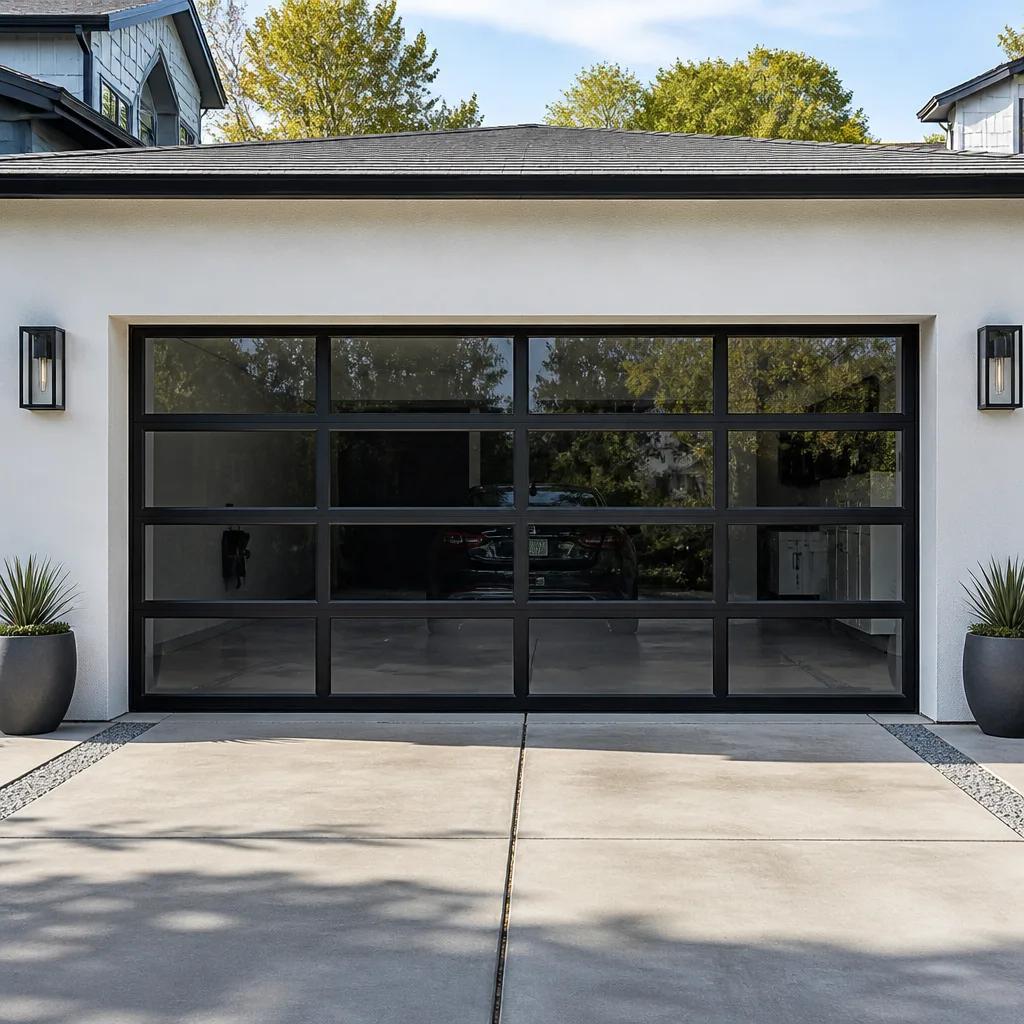
- Full-view glass
- LiftMaster openers
- Chamberlain openers
Table of Contents
- What Your Door’s Noise Is Telling You
- Visual Warning Signs: The Door Surface vs. the Hardware
- Movement Symptoms and What’s Driving Them
- Stop Using the Door vs. Monitor and Schedule
- How Plymouth’s Weather Changes These Warning Signs
- Opener Warning Signs vs. Door Warning Signs
- A Seasonal Check You Can Do Safely
- What Plymouth Homeowners Usually Face
What Your Door’s Noise Is Telling You
The same noise at a different point in the cycle points to a different part. That’s the single most useful thing to understand before you call anyone. Listen for when it happens: as the door starts to move, while it travels, or at the moment it stops.
A low grinding sound that runs the whole time the door is moving usually means metal-on-metal contact: worn steel rollers that have lost their nylon coating, or a hinge pin that’s dry and seizing. Squealing that rises and falls with the door’s travel is friction, most often from hinges and rollers that haven’t been lubricated, or from a torsion tube that’s running dry in its bearing plates. Popping is a different animal. A single sharp pop at the start of travel, followed by a door that feels unusually heavy or won’t stay up when you lift it by hand, almost always means a torsion spring has snapped. That one stops the diagnosis.
The Noise Diagnosis Matrix
- Grinding, continuous: worn rollers, dry hinge pins, or a bent track the rollers are dragging against.
- Squealing, cyclical: dry bearings, unlubricated hinges, or a torsion tube binding in its bearing plates.
- Popping, once at the start: a broken torsion spring. Stop using the door.
- Rattling over the whole travel: loose hinges, loose panel hardware, or a track that’s come out of alignment.
- Banging at the top or bottom of travel: travel limits set too far, or a door hitting the floor and slamming back.
- Scraping on one side: a track that’s out of plumb, or a roller that’s jumped its groove.
This is where brand familiarity earns its keep. A Craftsman opener with a belt drive and a Wayne Dalton door with proprietary spring hardware don’t diagnose the same way, and knowing the actual components on your door cuts the guesswork. We work on the brand you already have, which means we’re not substituting a generic part and hoping it behaves. If the noise turns out to be a door-side problem, garage door repair covers the hardware; if it’s coming from the motor housing, that’s a separate diagnosis.
Visual Warning Signs: The Door Surface vs. the Hardware
There’s an important split here that most checklists skip. What you see on the door surface and what you see on the hardware carry different urgency levels. A dented panel is cosmetic until it isn’t. A frayed cable is never just cosmetic.
Surface signs you can note and schedule:
- Dents and creases in a steel panel, which can eventually bind in the track.
- Rust spots along the bottom section, where road splash and standing water collect.
- Peeling paint or bubbling along panel seams.
- A gap between the bottom seal and the floor that lets light or air through.
Hardware signs that mean call now:
- Frayed or broken cables. The cables are under extreme tension. Do not touch them.
- A visible gap in a torsion spring, or a spring that hangs loose at one end.
- Track sections that are bent, separated, or pulled away from the jamb.
- Rollers that are cracked, missing, or sitting outside the track.
- Hinges that are torn from the panel or leaving elongated holes.
The rule of thumb: if the problem is on the door skin, you have time to plan. If it’s on the tension side, meaning springs, cables, and the brackets that hold them, treat it as an immediate stop and a professional call. The tension in a residential torsion system is enough to cause serious injury to an untrained hand, and this is not a component to experiment with.
Movement Symptoms and What’s Driving Them
Movement problems are the easiest to spot and the hardest to attribute without looking at the mechanism. Here’s how they map.
- Slow travel overall. Usually an opener issue, not a door issue: a failing capacitor, a worn drive gear, or a motor working against a binding door. Test by disconnecting the opener and lifting the door by hand; if it’s heavy, the door is the problem.
- Uneven descent, one side lower. A stretched or misadjusted cable on one side, a track out of level, or a torsion system that isn’t balanced.
- Reverses mid-cycle. Either the safety sensors are misaligned or blocked, or the door is binding hard enough that the opener’s force limit trips. Don’t raise the force setting to force it through; find the bind.
- Stops partway up. A travel limit set wrong, a binding track, or a failing opener logic board.
- Won’t stay up when lifted by hand. A broken or weakened spring. Stop using the door.
- Jerks or shudders on the way down. Dry or worn rollers, a damaged track, or a hinge that’s seized.
If a door is binding, chasing the opener isn’t the answer. A door that’s out of balance puts load on everything downstream, and a repair that ignores the balance point tends to come back. In our experience the movement symptom and the mechanical cause line up more cleanly than any other category, provided the door is tested by hand with the opener disconnected, which is a job best left to someone who knows what a properly balanced door should feel like. If the symptom points to springs, garage door spring repair is the service that addresses it.
Stop Using the Door vs. Monitor and Schedule
This is the decision that matters most, and it’s the one homeowners second-guess the longest. Use this split.
Stop using the door immediately if you see or hear any of the following:
- A snapped torsion spring, or a door that won’t hold open when lifted.
- A frayed, kinked, or disconnected cable.
- A door that has come off one track, or is hanging at an angle.
- A loud bang followed by the door dropping or refusing to open.
- Any component hanging loose near the spring or cable assembly.
Monitor and schedule service if you notice:
- Noise that’s new but consistent.
- A door that’s slower than it used to be.
- Dents, surface rust, or a worn bottom seal.
- Rollers that look worn but are intact.
- A remote or wall button that only works sometimes.
When in doubt, leave the door down and call. A door that’s stuck closed is an inconvenience; a door that fails while someone is walking under it is a different category of problem entirely. A technician can tell you within a few minutes of looking whether you’re in the stop category or the schedule category, and there’s no charge for that diagnosis when we quote the work.
How Plymouth’s Weather Changes These Warning Signs
Plymouth homes put their garage doors through a specific pattern that’s worth knowing. The winter freeze-thaw cycle is the main driver. Water collects at the bottom seal, freezes overnight, and expands; the seal compresses and then doesn’t spring back fully. Over a season, that gap at the floor widens, which lets in cold air, moisture, and small pests. Checking the bottom seal with a flashlight after the first hard freeze is one of the simplest pre-emptive checks a Plymouth homeowner can do.
The other pattern is temperature-driven spring behavior. Steel springs change tension with temperature, and a door that’s perfectly balanced in July can feel noticeably heavier on a cold morning. That’s normal to a point. It’s not normal for the door to need a second try to open, or for the opener to strain audibly at the start of travel. When the opener is doing more work than it should because the door has stiffened, the motor and drive gear wear faster, which is why opener failures often show up in the colder months rather than the warmer ones.
Humidity along the South Shore also affects the door skin. Steel panels are more prone to rust along their bottom edges, and the seam where panels meet. Wood doors, if you have one, will swell and bind in summer and shrink and rattle in winter; both behaviors are seasonal and both will put strain on the hardware over time. If you have a Raynor or Amarr steel door, checking the bottom section after each winter is a sensible routine. None of this requires a service call to monitor, and none of it means your door needs replacing.
Opener Warning Signs vs. Door Warning Signs
Roughly half of the “my garage door is broken” calls we take turn out to be an opener problem, not a door problem. Knowing the split saves you from paying for the wrong repair.
Opener warning signs:
- The wall button works but the remote doesn’t, or the reverse.
- The motor hums but the door doesn’t move.
- The door moves a few inches and stops, repeatedly.
- The opener light flashes in a pattern.
- The safety sensors have a light that isn’t solid.
- The opener runs louder than it used to, or makes a rhythmic clicking sound.
Door warning signs that can masquerade as opener faults:
- A door that reverses because it’s binding, which trips the opener’s force limit.
- A door that’s sluggish because the springs have weakened, which makes the motor work harder.
- A door that grinds because a roller has failed, which sends vibration through the opener’s rail.
The practical distinction: if the door behaves the same way whether you operate it from the wall button, the remote, or by hand, the door is the problem. If the door moves smoothly by hand but the opener struggles, the opener is the problem. LiftMaster and Chamberlain systems handle diagnostics differently than a Genie or a Craftsman, and the fault codes and force-limit settings are specific to each. If the diagnosis points to the motor, garage door opener repair covers the motor, logic board, sensors, and drive components. Repairing what’s there is almost always cheaper than replacing the unit, and for a modern opener it’s usually the right call.
A Seasonal Check You Can Do Safely
A visual and auditory walkaround takes ten minutes and catches most of the warning signs above before they turn into failures. Stay away from the tension side of the system: no touching springs, cables, or the brackets that hold them.
- With the door closed, look at the springs and cables from a distance. Note any gap in a spring, any frayed cable, anything hanging loose. If you see any of these, stop here and call.
- Check the bottom seal with a flashlight from inside the garage. If light comes through, the seal is worn or the door is slightly out of level.
- Operate the door from the wall button and listen. Note whether the noise is continuous or cyclical, and whether it happens at the start, during travel, or at the stop.
- Check the safety sensors at the base of the tracks. Their indicator lights should be solid and unobstructed.
- Test the auto-reverse by placing a solid object in the door’s path. The door should reverse on contact.
- Look at the door skin for dents, rust, and separation at panel seams.
- Look at the wall-mounted opener and note any blinking or fault indicator.
That’s the whole check. Write down what you notice before you call, and describe the timing of the noise or movement. It shortens the diagnosis, and it means you won’t be talked into a repair you didn’t need.
What Plymouth Homeowners Usually Face
Warning signs rarely lead to a single fix. A worn roller usually comes with a worn hinge; a failing spring usually means the door is out of balance. Below is the range of work these symptoms typically lead to, so you know what kind of repair you’re walking into.
- Noise-only adjustment (hinges, rollers, lubrication, track alignment): the low end of a typical service call, quoted before work starts.
- Roller replacement: usually done as a set, since the door’s load works them evenly.
- Track straightening or track section replacement: priced by section, and usually quoted after the door is measured.
- Bottom seal replacement: a common Plymouth fix after a winter of freeze-thaw.
- Opener motor, gear, or logic board repair: often cheaper than replacing the unit, and an option to ask about before you assume you need a new opener.
- Torsion spring replacement: priced per spring, and matched pairs are usually replaced together, so a pair costs roughly double a single spring.
- Safety sensor and wiring repair: a small job that stops the door from reversing at random.
Spring work is the one to be careful with on price. A quoted range for one spring is not the price for a pair, and a matched pair is almost always the right call when both springs are the same age. Get the quote for the actual work, in writing, and confirm that it’s agreed before anything is touched. Prices are quoted per job by estimate, and the final number comes from the written estimate, not from a phone range. Free estimates in Plymouth are available: call (833) 754-9851.
Common Mistakes to Avoid
- Turning up the opener’s force setting to get through a bind. This masks a door problem and stresses the motor and drive gear until one of them fails. Fix the bind, not the symptom.
- Touching a spring or cable because it looks loose. The tension in a residential torsion system is stored energy, not a broken part waiting to be reattached. This is a job for someone with the right tools and training.
- Replacing the opener when the door is the problem. A door that binds or is out of balance makes any opener struggle. Diagnose the door first.
- Ignoring a small dent in a steel panel. In Plymouth’s freeze-thaw cycle, a panel that binds slightly in the track will wear the rollers faster than you’d expect.
- Assuming a loud door needs a new door. Noise is usually hardware: hinges, rollers, bearings, or a dry torsion tube. It’s a repair, not a replacement.
- Replacing only one spring when both are the same age. The second one is on the same wear cycle, and a matched pair is the standard approach.
- Skipping the written quote. Ask for the price in writing before work starts, and confirm what’s included. A verbal range is not an estimate.
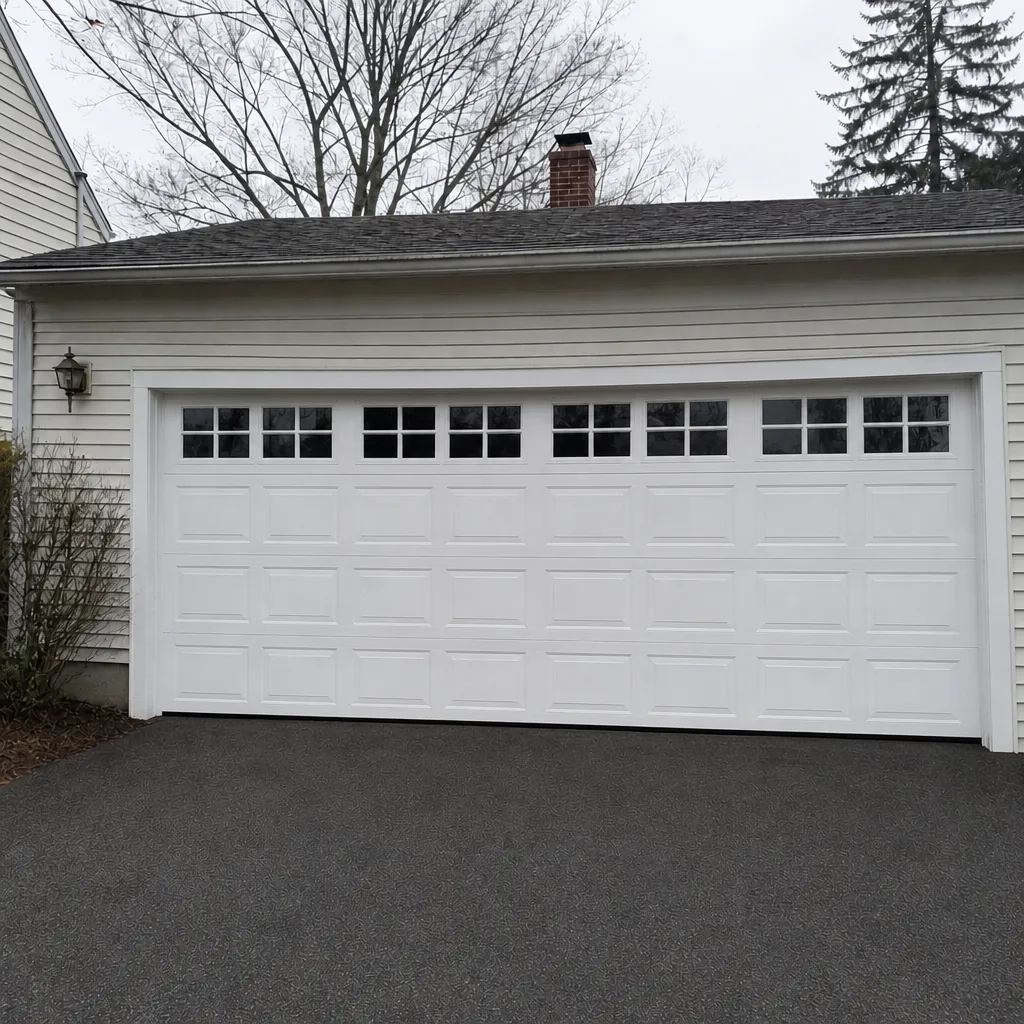
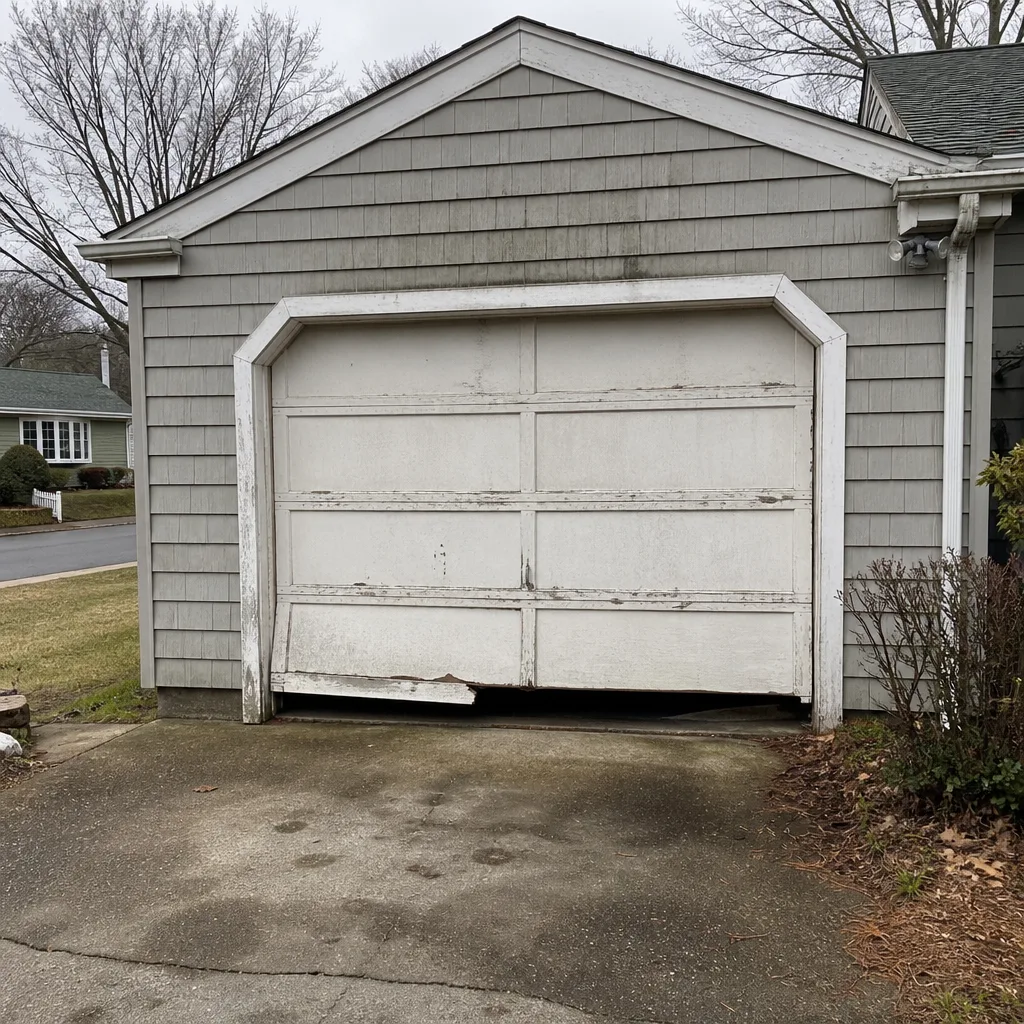
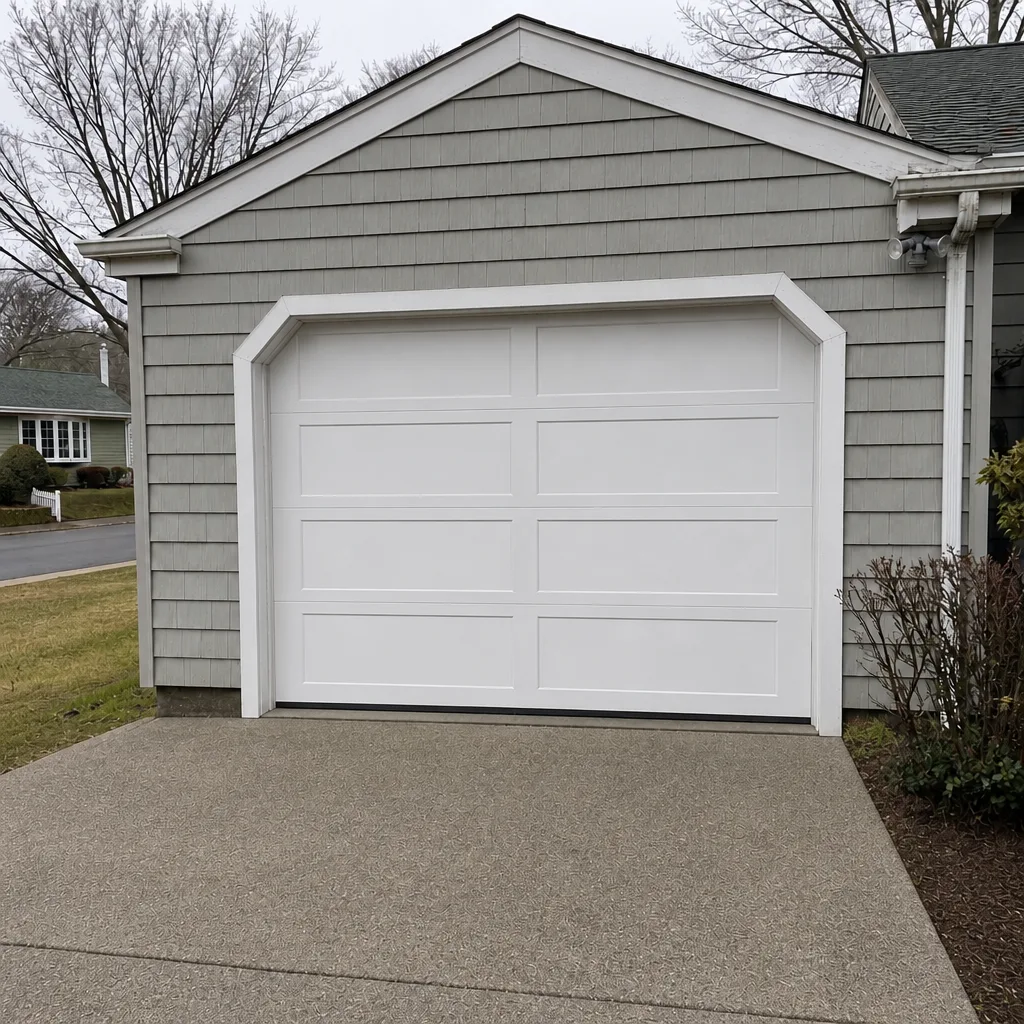
See the difference
 Before
 After
 Before
 After
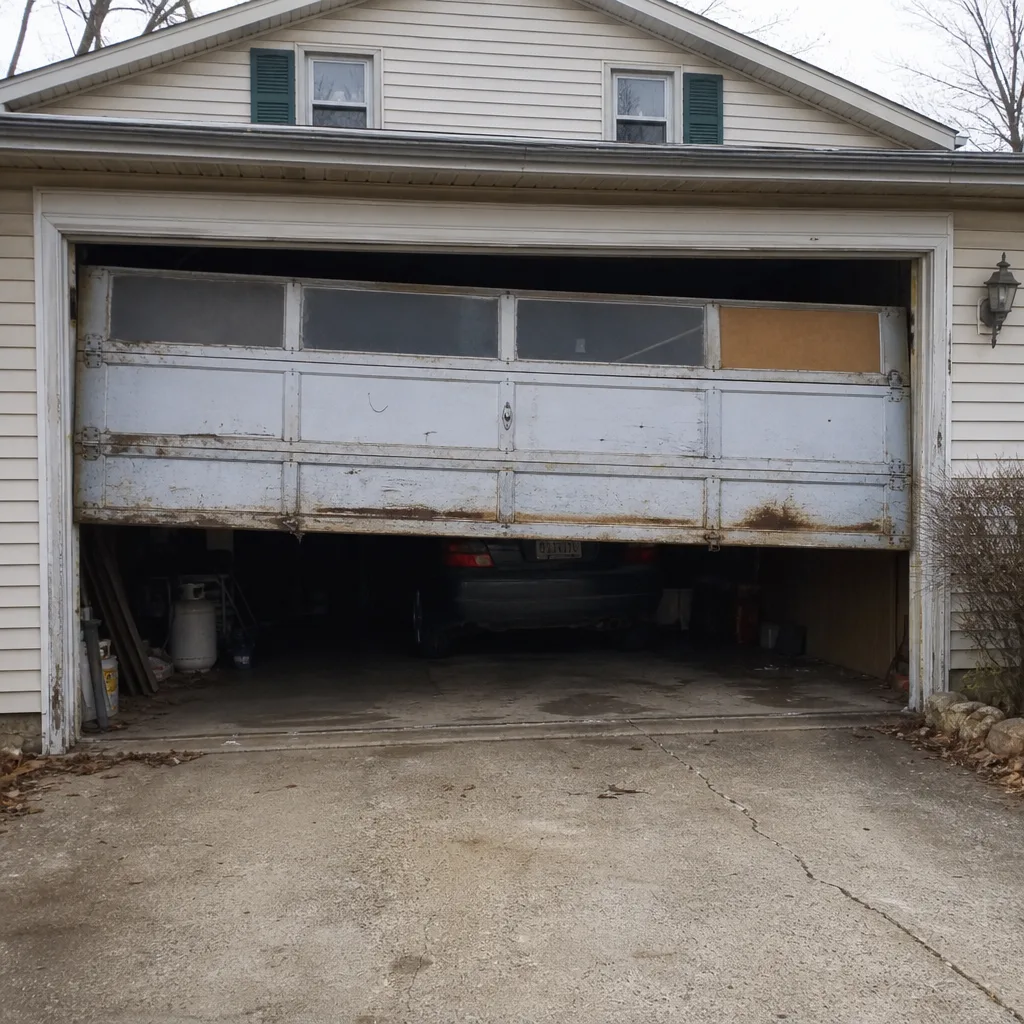 Before
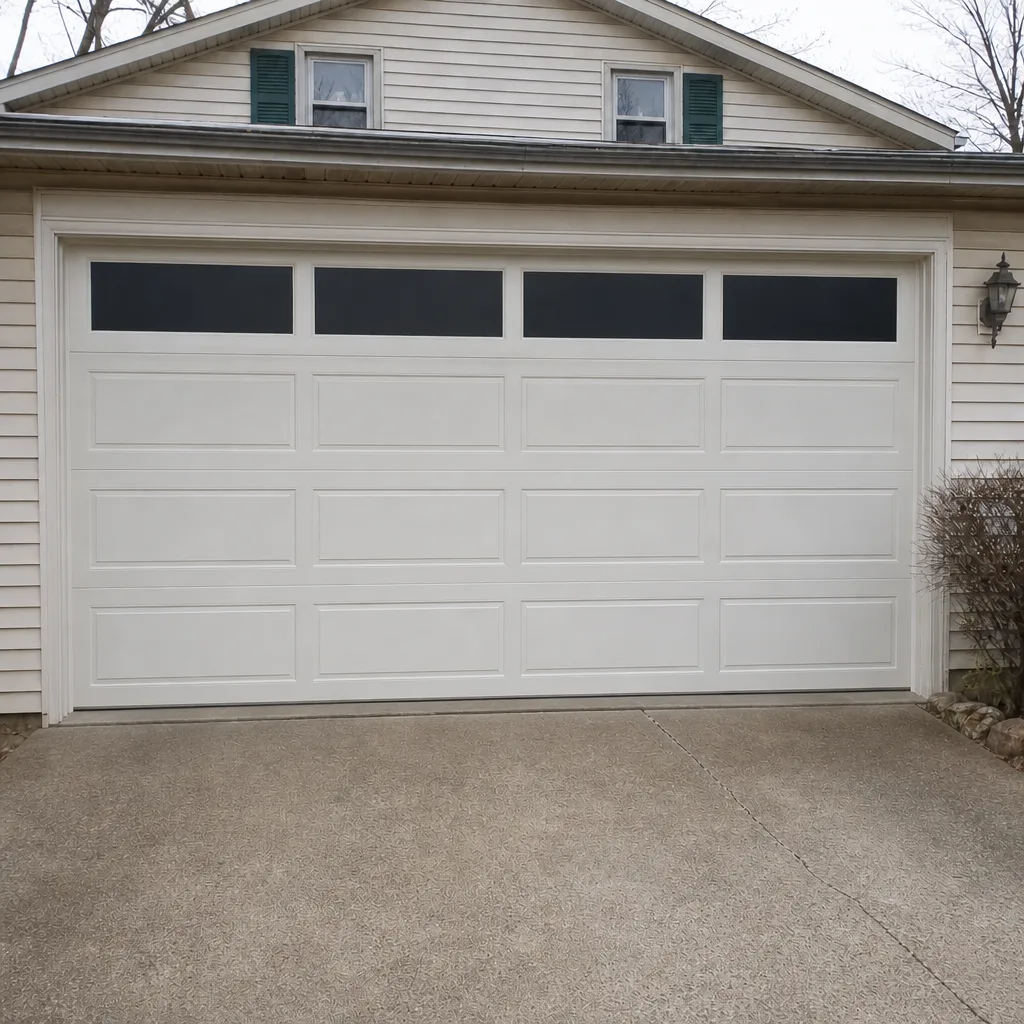 After
When to Call a Professional
Call a professional when the warning sign involves the tension side of the system, meaning springs, cables, or the hardware that holds them; when the door is binding or out of balance; when the door won’t hold open; or when the cause is genuinely unclear after a visual check. Also call if the door has come off a track, if a cable is frayed, or if the opener is running but the door isn’t. Repair-first is the right starting point for all of these. Our technicians have up to 14 years of experience, and we work on the brand you already have: Amarr, Wayne Dalton, Craftsman, Raynor and the rest of the major residential names. No guesswork, we diagnose before we quote. Garage Door Repair Plymouth Pros offers free estimates in Plymouth, call (833) 754-9851.
Frequently Asked Questions
The most common are new noise (grinding, squealing, or popping), a door that’s slower than it used to be, a gap at the bottom seal, and an opener that reverses or stops partway. The single most urgent sign is a loud pop followed by a door that won’t stay up. That’s a spring, and the door should stay closed until it’s repaired. Call (833) 754-9851 for an exact quote; estimates are free.
Almost never. Grinding is a hardware symptom, usually worn rollers, a dry hinge pin, or a track that’s out of line. It’s a repair, not a replacement. A technician can confirm by looking at the rollers and track. Call (833) 754-9851 for an exact quote; estimates are free.
It can be. A sharp pop at the start of travel usually means a broken torsion spring, and the door is now unsupported. Don’t try to open it and don’t try to fix the spring yourself; the tension involved is high enough to cause serious injury to an untrained hand. Leave the door closed and call (833) 754-9851.
First check the safety sensors at the base of the tracks. If their lights are solid and nothing is in the path, the door is probably binding and tripping the opener’s force limit. Don’t raise the force setting to force it through. Call (833) 754-9851 so we can diagnose the actual bind.
Cold changes spring tension and stiffens lubricated parts, so a door balanced in summer feels heavier in January, and the opener works harder as a result. Some stiffness is normal; a door that needs a second try to open, or that strains audibly, is a sign to schedule service. Call (833) 754-9851 for an exact quote; estimates are free.
Test the door by hand with the opener disconnected. If the door moves smoothly, the opener is the problem; if it’s heavy or binds, the door is. That single test answers most of the question. If it’s the motor, sensors, or drive system, we can diagnose it in Plymouth along with the door. Call (833) 754-9851 for an exact quote; estimates are free.
The Bottom Line
Warning signs are only useful when they’re tied to the right part. Noise at the start of travel is usually a spring; noise throughout is usually rollers or bearings; a door that reverses is usually binding or a sensor. Anything on the tension side stops the door until someone qualified looks at it. Everything else can be scheduled. Describe the symptom with its timing, get a written quote before any work starts, and don’t let a noise turn into a replacement you didn’t need. For a Plymouth home, that’s the whole playbook, and it’s the one we use on every call. Garage Door Repair Plymouth Pros is one call for door, opener, and spring work.
Contact
If you’ve noticed any of these signs and you’d rather have a straight answer before deciding what to do, call Garage Door Repair Plymouth Pros at (833) 754-9851 for a free estimate. We’ll diagnose the door, the opener, and the springs together, tell you what actually needs fixing, and quote it in writing before anything starts.
Written by the team at Garage Door Repair Plymouth Pros.