Last updated November 20, 2026
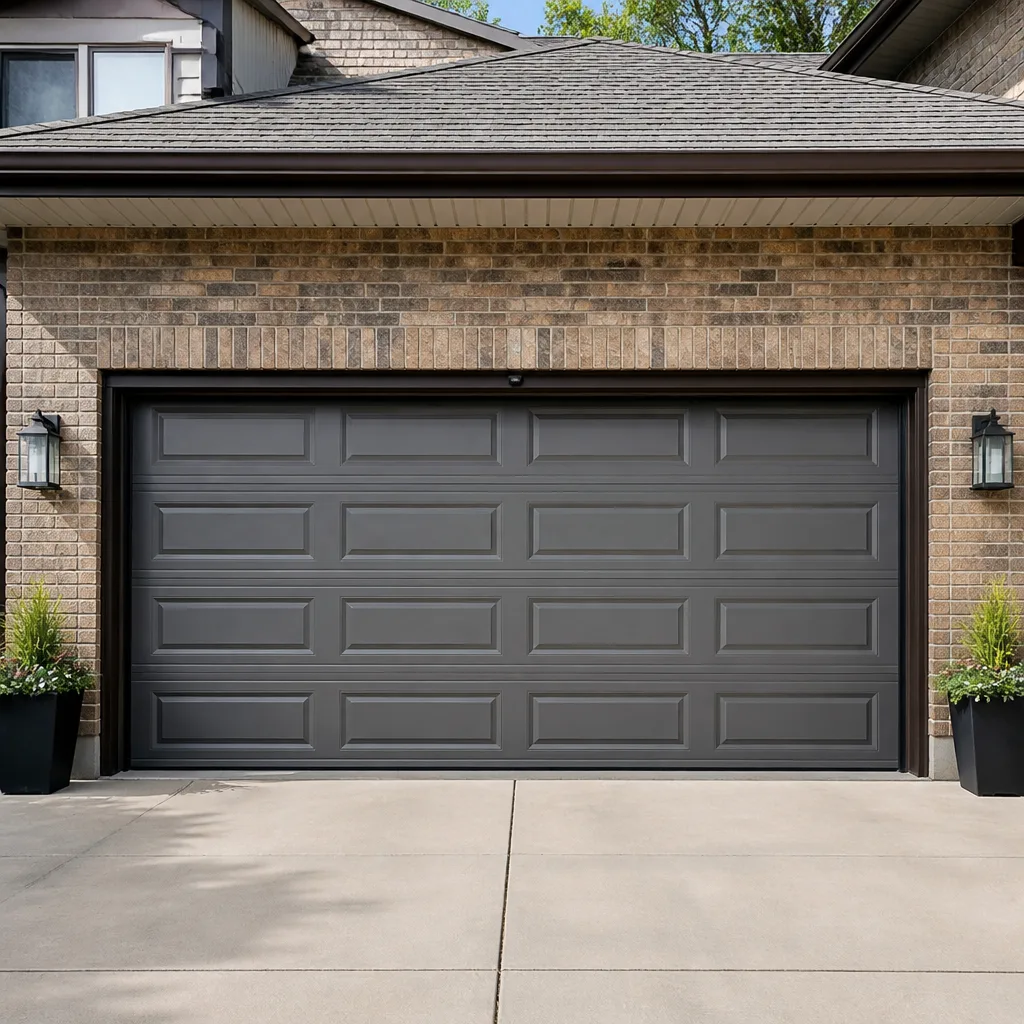 Raised-panel steel
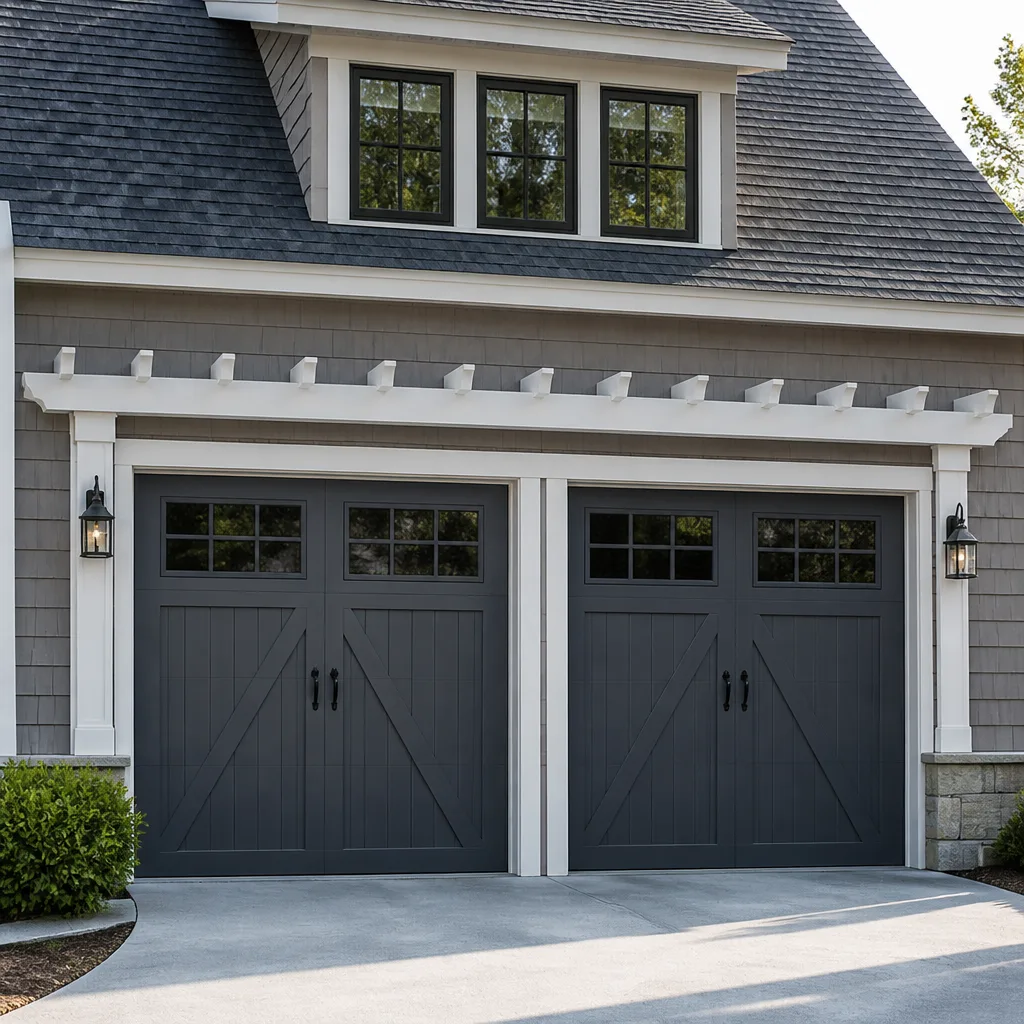 Carriage house
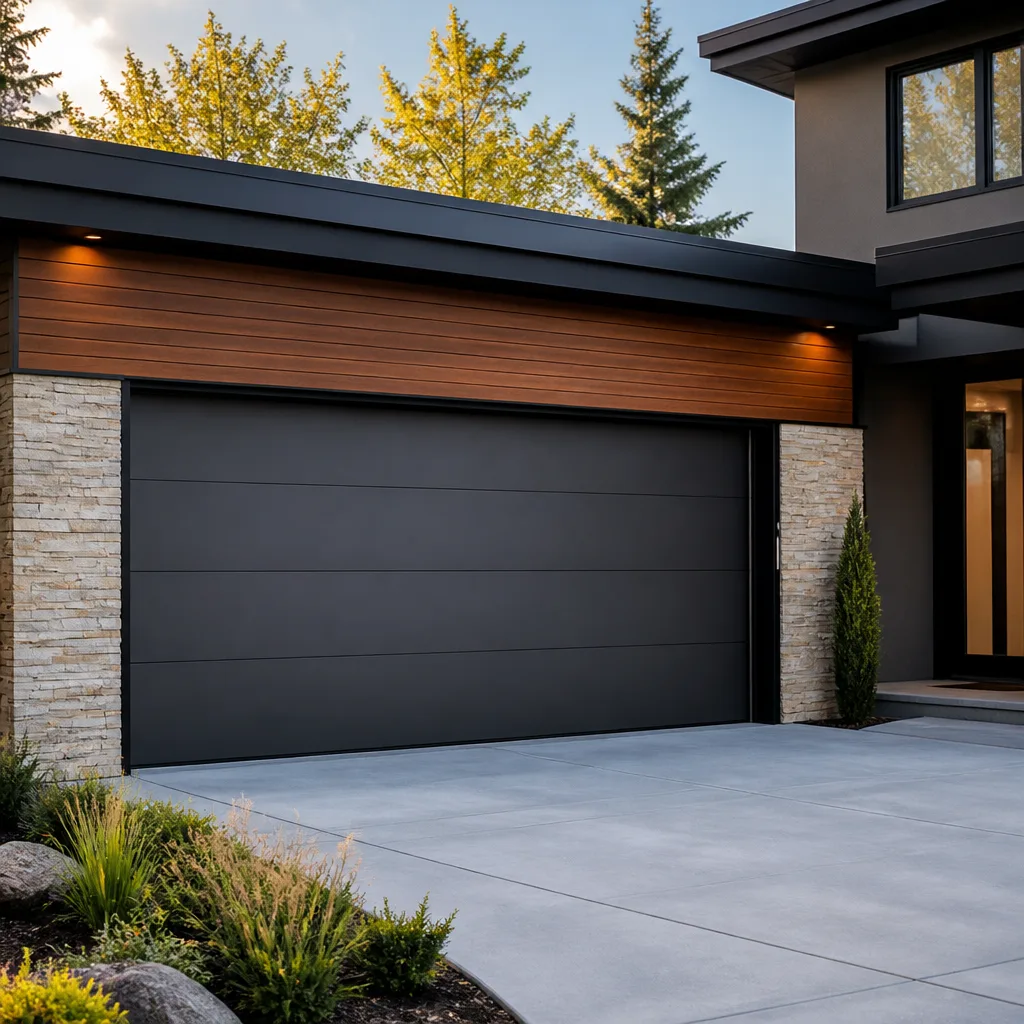 Modern flush
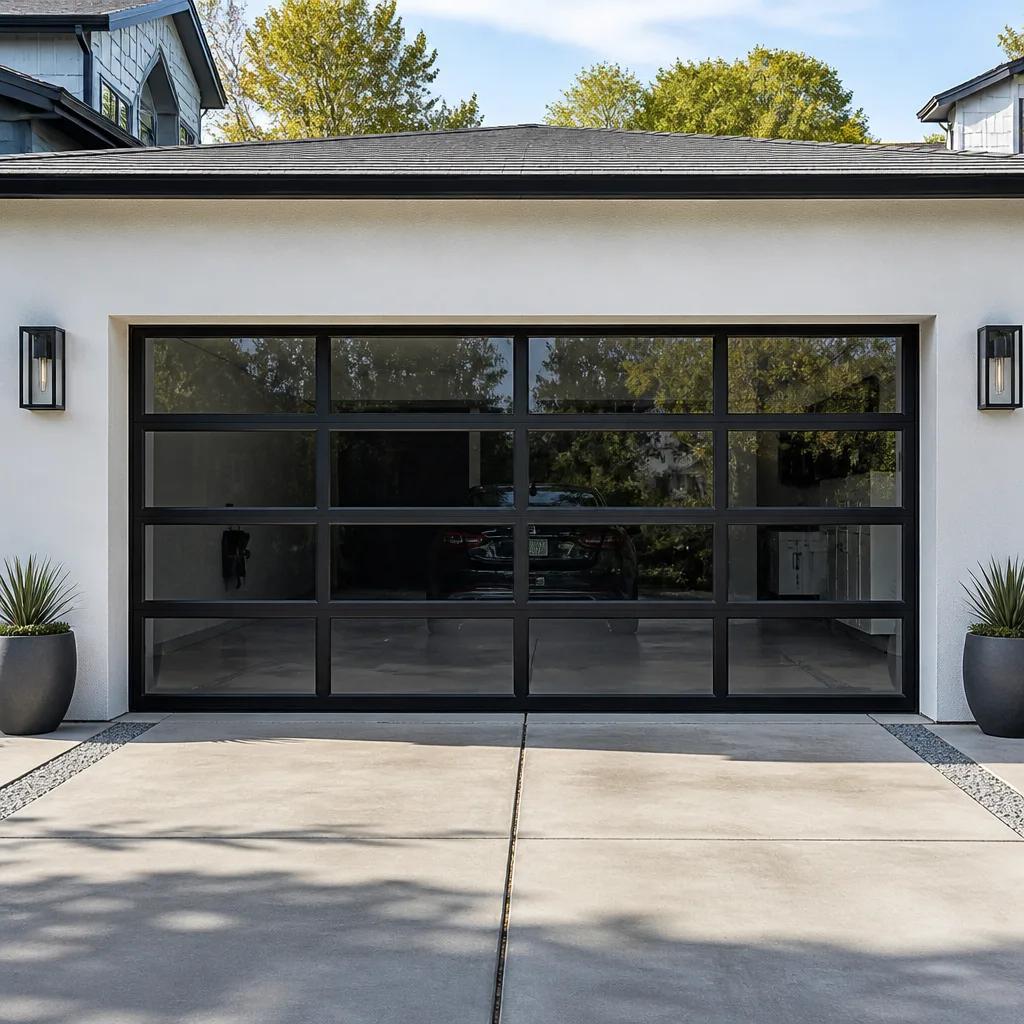 Full-view glass
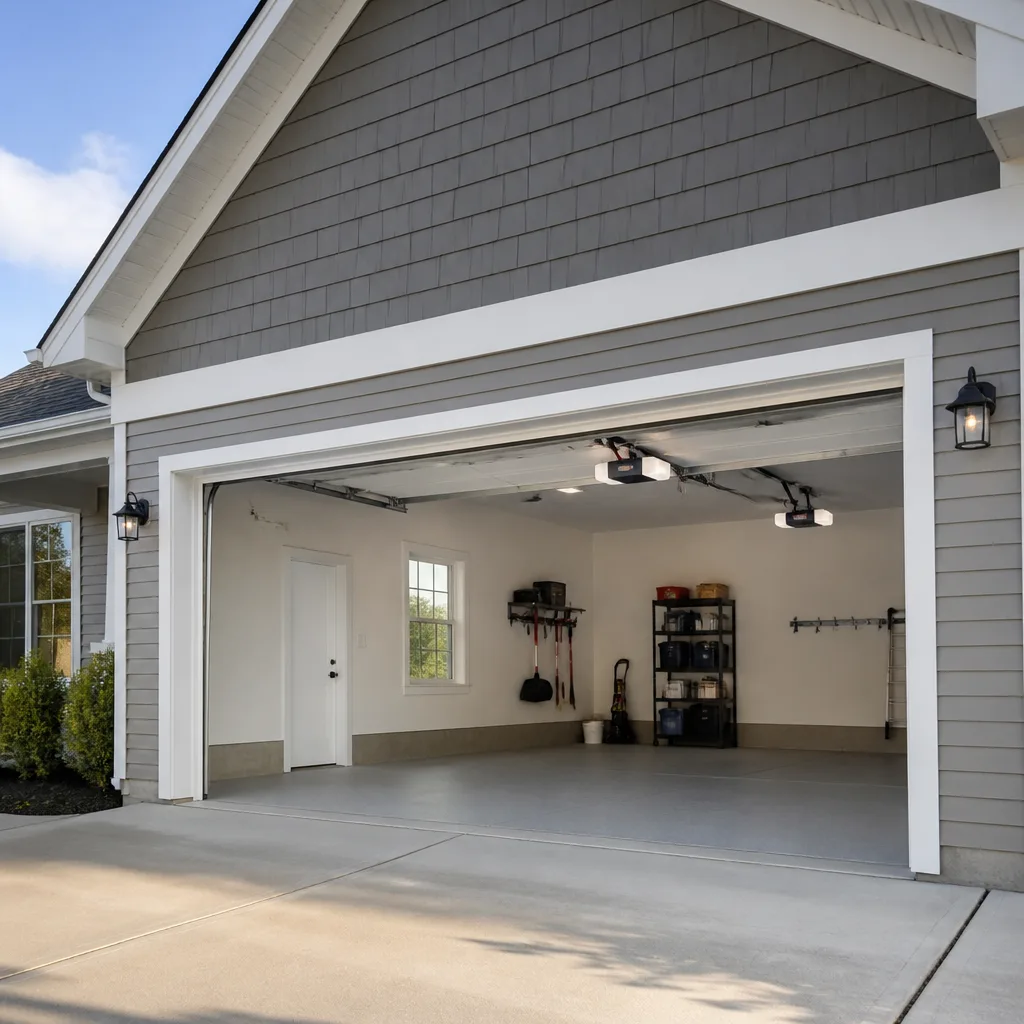 LiftMaster openers
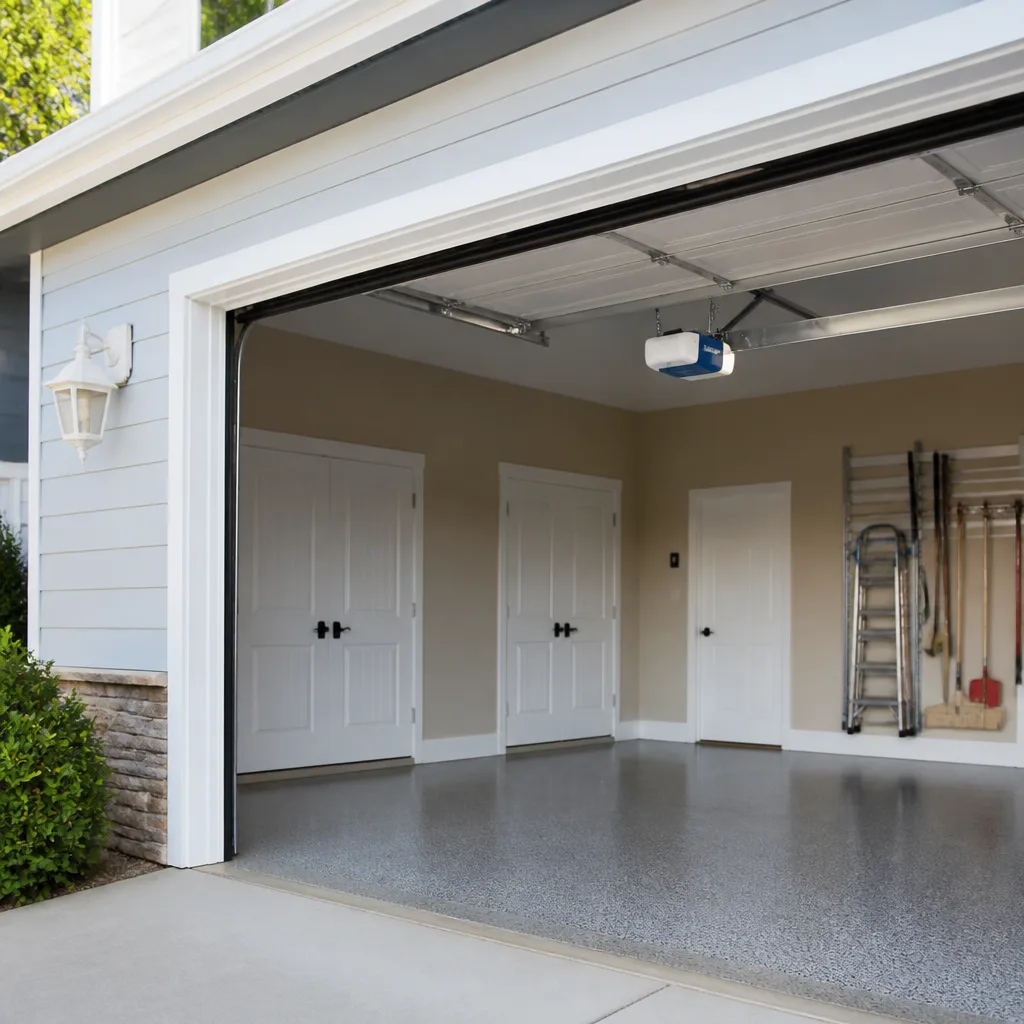 Chamberlain openers
Full 25-point door and opener safety check with every visit - springs, cables, rollers, tracks, and your LiftMaster or Chamberlain opener included
You get a price before we start. It does not change when the pro arrives.
Get your free estimateThe Complete Guide to Garage Doors in Plymouth
Most garage door guides are written for Phoenix or Atlanta climates – dry air, mild winters, hardware that lasts a decade without a complaint. Plymouth doesn’t work that way. Here, the same door faces coastal moisture, a hard freeze-thaw rhythm every winter, and housing stock that runs from mid-century capes to new construction off the waterfront. Ten years in this climate does things to springs, cables, and bottom seals that inland Massachusetts homeowners never see. This guide maps the full lifecycle of a Plymouth garage door: what actually wears first, which brands and openers show up most, how to decide between repair and replacement, and where the real costs sit. You’ll finish knowing how to make an informed call.
Quick Answer
Garage doors in Plymouth age faster than the same doors a few dozen miles inland, mostly because salt-laden air and freeze-thaw cycling attack springs, cables, and bottom seals first. Most Plymouth homes don’t need a new door – they need targeted repair of the components that wear fastest in this climate. A repair-first approach, using parts matched to the brand already on your door, usually gets you years more life at a fraction of replacement cost.
Styles & brands we work with
- Raised-panel steel
- Carriage house
- Modern flush
- Full-view glass
- LiftMaster openers
- Chamberlain openers
Table of Contents
- What Plymouth’s Climate Does to Your Hardware Over 10 Years
- How Coastal Salt Air Accelerates Spring and Cable Wear
- Which Brands and Openers Show Up in Plymouth Homes
- Why Plymouth’s Frost Line Matters for Seals and Thresholds
- Component-by-Component: What Wears First Here
- Repair-First vs. Replace-First Decision Logic
- What Garage Door Repair Costs in Plymouth
- Safety: Springs and Cables Are Not a Weekend Project
What Plymouth’s Climate Does to Your Hardware Over 10 Years
Plymouth sits in a coastal New England climate that swings hard between seasons. Summer humidity soaks into anything metal. Winter brings repeated freezes and thaws, sometimes several in a single week. Spring and fall add wet, salt-laden air off the water. Your garage door hardware lives through all of it, every year, and the wear pattern is cumulative rather than sudden.
Here’s the practical timeline. The first few years are mostly cosmetic – light surface rust on untreated fasteners, a little stiffness at the hinges. By year four or five, cables start to show pitting and the torsion spring loses some of its lift. Weatherstripping stiffens and stops sealing well. By year eight to ten, if the door hasn’t been serviced, the combination of stretched springs, corroded cables, and a worn bottom seal creates the conditions for the failures most Plymouth homeowners call about.
That timeline compresses if the door faces prevailing weather – a south-facing garage that catches wind-driven rain and salt air ages noticeably faster than a sheltered one. In our experience, two otherwise identical doors in Plymouth can be five years apart in hardware condition based on orientation alone.
What makes this climate different isn’t any single factor. It’s the overlap: moisture accelerates corrosion, temperature cycling fatigues springs, and salt speeds everything up. A door rated for inland conditions meets a harder environment here. Knowing that changes how often you inspect and what you budget for.
How Coastal Salt Air Accelerates Spring and Cable Wear
Salt accelerates corrosion because it holds moisture against bare metal. For a garage door, the vulnerable parts are the torsion or extension springs, the lift cables, and every fastener in the system. These are high-tension steel components, and steel under load plus salt plus moisture is a corrosion problem, not a cosmetic one.
Inland Massachusetts towns see cable and spring corrosion too, but it’s slower. A cable inland might tolerate years of slow oxidation before pitting becomes a safety concern. Along the Plymouth coastline, that same cable can show visible pitting and stiffness far sooner because salt deposits stay on the surface and keep pulling moisture in.
- Springs: Oil-tempered steel coils are the most stressed part of the system. Salt air causes surface corrosion that turns into hairline pitting, and a pitted spring fatigues faster.
- Cables: The braided steel lift cables are exposed along their run. Corrosion weakens individual strands, and once one strand fails under load, the rest follow.
- Fasteners and hinges: The bolts, brackets, and hinges are less dramatic but still matter. A rusted hinge binds and puts uneven load on the door.
- Rollers: Steel rollers with sealed bearings resist better than cheap unsealed ones, which is why the roller quality on your door pays off more here than inland.
Homeowners with a garage within a few blocks of the shoreline should treat a corrosion inspection as a yearly habit, not a once-a-decade one. For the parts that rust fastest, that means knowing they will need attention sooner than a generic guide would suggest.
Which Brands and Openers Show Up in Plymouth Homes
Plymouth’s housing stock is a mix of older capes and colonials, mid-century ranches, and newer construction closer to the waterfront. Each era left its fingerprint on the garage hardware. Knowing what’s common in a Plymouth garage helps you understand what kind of repair you’re likely facing.
Older doors, especially those on the Cape-and-Colonial housing from the middle of the last century, often show up with Clopay and Wayne Dalton panels. These are still going because the doors were built to last – but their openers are frequently a weak point, either the original or a budget replacement shoehorned in years ago. Genie and Craftsman openers are common on these older homes, and they’re the models a lot of general handymen won’t touch because the parts sourcing takes specific knowledge.
What we see in newer Plymouth garages
Newer builds and renovated homes lean toward LiftMaster and Chamberlain openers, often the smart-home connected models. A homeowner who set up the app and the remote access wants a technician who can work with that system without disabling half of it. That’s part of why brand familiarity matters: we work on the brand you already have, whatever it is.
| Home Era | Common Door Brands | Common Openers |
|---|---|---|
| Older capes and colonials | Clopay, Wayne Dalton | Genie, Craftsman |
| Mid-century ranches | Clopay, Amarr | Genie, older LiftMaster |
| Newer and renovated homes | Amarr, Raynor, Clopay | LiftMaster, Chamberlain |
There are plenty of exceptions. The point is that the brand on your door tells a technician a lot about what’s likely worn and what parts will be needed. Matching to the actual system beats a generic workaround every time.
Why Plymouth’s Frost Line Matters for Seals and Thresholds
The frost line is the depth to which the ground freezes in winter. It matters to your garage door because the bottom seal and the floor at your door’s base sit right on the edge of that freeze-thaw cycle. If water gets under the door and freezes, it lifts, cracks, and warps. If it pools and thaws repeatedly, it erodes the floor edge and pulls the seal out of alignment.
Plymouth’s frost depth is deeper than in warmer parts of the country, and the number of freeze-thaw cycles each winter is higher. That means the bottom seal has to handle more than just keeping weather out – it needs to survive ice pushing up against it from below and hold a seal through repeated thaw-and-refreeze. A cheap, stiff seal fails quickly. A flexible seal, matched to the actual gap between the door bottom and the floor, lasts far longer.
What to check at the ground line
- Look for daylight under the closed door when it’s dark outside. If you see it, the seal is failing or the door is out of alignment.
- Feel the bottom seal for stiffness and cracks. A seal that has lost flexibility can’t conform to an uneven floor.
- Check the floor edge at the threshold for cracks, lifting, or erosion from freeze-thaw water.
- Test that the door closes flat and fully. A gap means the seal is being asked to do work it can’t do.
If your garage has a sloped driveway dumping meltwater against the door, you’ll want the seal at its best. Water collecting at the threshold in winter is what turns a simple seal replacement into a much bigger job over the years.
Component-by-Component: What Wears First Here
In Plymouth’s climate, the order of failure is fairly predictable. Here’s what goes first, in rough order, and what it means for how you plan repairs.
- Bottom seals: Fastest to fail. They sit in the water and ice line and are exposed to salt air. Expect to inspect them yearly and plan for replacement every few years, sooner if the door faces weather.
- Lift cables: Second to go, because they’re exposed along their length and carry the door’s weight. Salt-driven corrosion shows up as pitting and stiffness. Cables are a safety-critical part – they’re under high tension and should never be handled by an untrained DIYer.
- Torsion or extension springs: High-tension, heavily loaded, and sensitive to corrosion fatigue. These are the part most likely to fail dramatically if left unaddressed, which is why spring work needs specialized tools and training.
- Hinges and rollers: Gradual wear. A stiff hinge or a rough roller puts extra strain on the opener. Regular lubrication slows this down considerably.
- Opener gear and drive: The opener itself usually outlasts the mechanical parts of the door but gets blamed for failures that start elsewhere. A grinding opener often means a door that’s out of balance, not a failing motor.
- Panels and tracks: Slowest to fail but expensive when they do. Tracks take damage from impact or from a door that’s been run out of alignment.
Because the failure order is predictable, maintenance can be targeted. Give the seal and cables the most attention, and the rest of the system gets easier.
Repair-First vs. Replace-First Decision Logic
There’s a real split in the garage door world between companies who fix what you have and companies whose model pushes new doors. We’re repair-first because that’s what actually saving your system looks like most of the time. But repair-first isn’t the answer every single time, and an honest guide should say so.
When repair is the right call
- The door panels are structurally sound with no rust-through or major dents.
- The failure is in a serviceable part: a spring, a cable, a seal, a roller, a hinge, an opener.
- The door is out of balance but the panels and track are fine.
- The opener is compatible with the door’s weight and the brand parts are available.
When replacement deserves a serious look
- Multiple panels show rust-through or serious structural damage.
- The track is bent beyond realignment.
- The door is so old that the parts to keep it running are either unavailable or failing faster than they can be replaced.
- You’re renovating the garage or the facade as a whole.
Age alone isn’t a replacement signal. A well-maintained older door in Plymouth can outlast a new one that isn’t serviced. The decision should hinge on the condition of the structure, not the age of the sticker. When a repair is what’s needed, matching new parts to the brand already on the door is what keeps the system coherent – the alternative, mismatched parts, tends to accelerate the next failure. That’s the thinking behind our garage door repair work, and it’s the same thinking we apply to garage door opener repair when the motor’s fine but the drive or logic board isn’t.
What Garage Door Repair Costs in Plymouth
Cost depends on the part and the door, but the ranges below are typical for Plymouth. Treat them as estimates: the written quote you get after a proper diagnosis is the actual price, and it’s agreed before any work starts.
| Repair | Typical Estimated Range |
|---|---|
| Spring replacement (single spring) | $180 – $340 |
| Matched spring pair | roughly double the single-spring range |
| Cable replacement | $150 – $300 |
| Bottom seal replacement | $120 – $220 |
| Roller and hinge service | $90 – $180 |
| Opener repair or component replacement | $150 – $400 |
One thing worth understanding: a matched pair of springs is usually replaced together because the pair shares the load, and a new spring paired with a worn one fails sooner. Quoting one spring and a pair at the same price would be misleading, so we don’t. If your door has a torque-master or extension spring, ask specifically how that changes the range.
For homeowners comparing quotes, the transparency of the pre-work diagnosis matters as much as the number. A quote that doesn’t identify what actually failed is a guess. Our approach is no guesswork – we diagnose the problem first, then quote the repair. When the spring is the failing part, that’s a separate, specialized job and it’s priced as such; our garage door spring repair work covers both individual springs and matched pairs. Call (833) 754-9851 for an estimate – it’s free.
Safety: Springs and Cables Are Not a Weekend Project
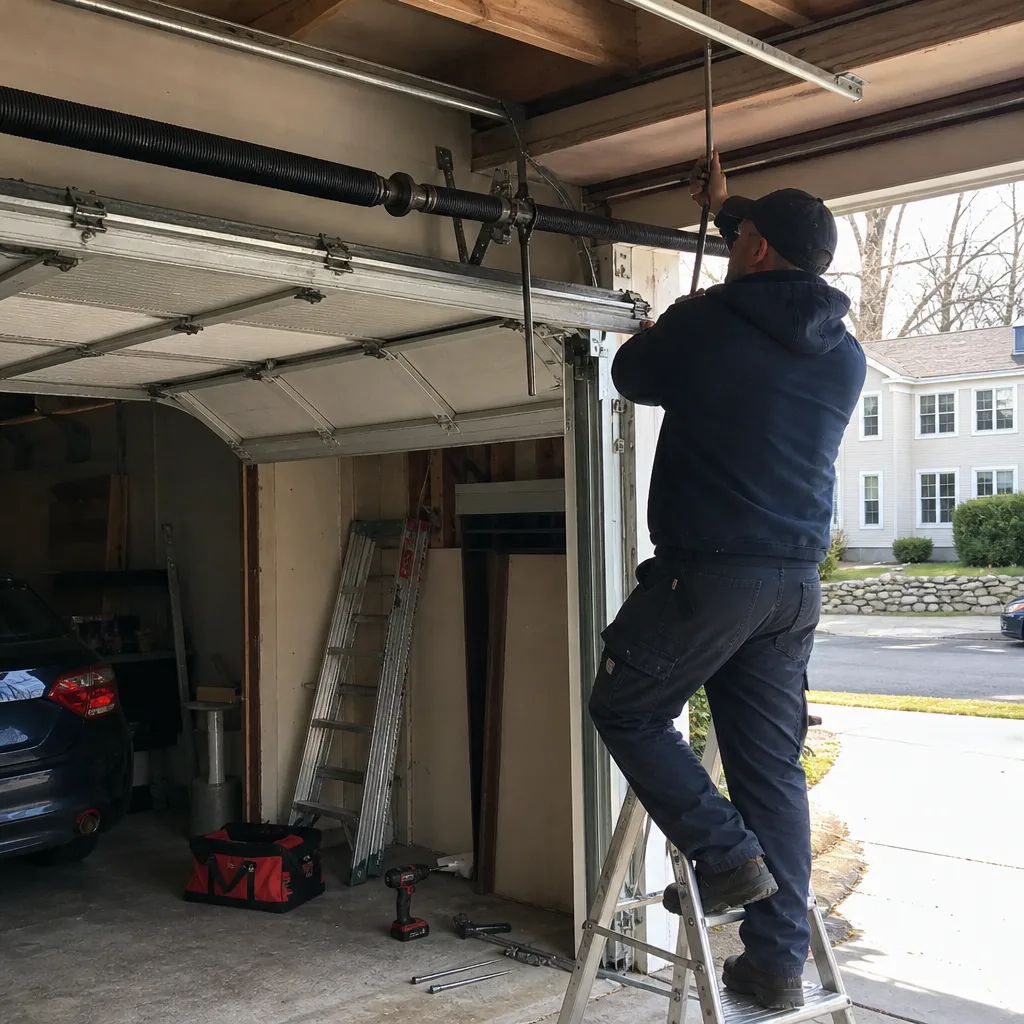
Garage door springs and cables are under extreme tension. A torsion spring holds a substantial load even on a modest door, and releasing that tension without the right tools and training can cause serious injury. Cables can whip when they fail. This is the one part of the guide where we ask you to step back and leave it to a trained professional.
What you can safely do is observe and lubricate. A visual inspection of springs and cables for rust, pitting, or stretching is fine. Applying proper garage door lubricant to hinges and rollers is a reasonable homeowner task. What’s not reasonable is trying to replace a spring, adjust a torsion bar, or take the load off a cable yourself. A door that’s out of balance, falling fast, or making a crack as it moves is telling you it’s time for a trained technician.
In our experience, the homeowners who call before attempting spring work save themselves the risk entirely. Spring repair done safely is a technician job – it always has been – and it’s the reason we specialize in it rather than treating it as an optional add-on.
Common Mistakes to Avoid
- Ignoring the bottom seal: A cheap seal fails fast in Plymouth’s freeze-thaw, and once water gets into the threshold, the damage gets more expensive than the seal you skipped.
- Replacing a single spring: Pairing a new spring with a worn one shortens the new spring’s life. If the springs are matched, replace them matched.
- Blaming the opener for a mechanical failure: A door that’s out of balance or a track that’s bent puts strain on the opener. Replacing the motor doesn’t fix the underlying problem.
- Using a general handyman for spring work: High-tension spring and cable work needs specialized tools and training. A generalist can do real harm here.
- Using grease or the wrong lubricant on hinges: Thick grease traps grit and grit wears parts faster. Use a proper light garage door lubricant.
- Skipping the seasonal checkpoint: A door that seems fine in summer can be overdue when winter arrives. Inspect spring, cables, and seal before the first freeze.
- Assuming an older door needs replacing: Structural condition, not age, should drive that call. A sound older door serviced correctly outlasts a neglected new one.
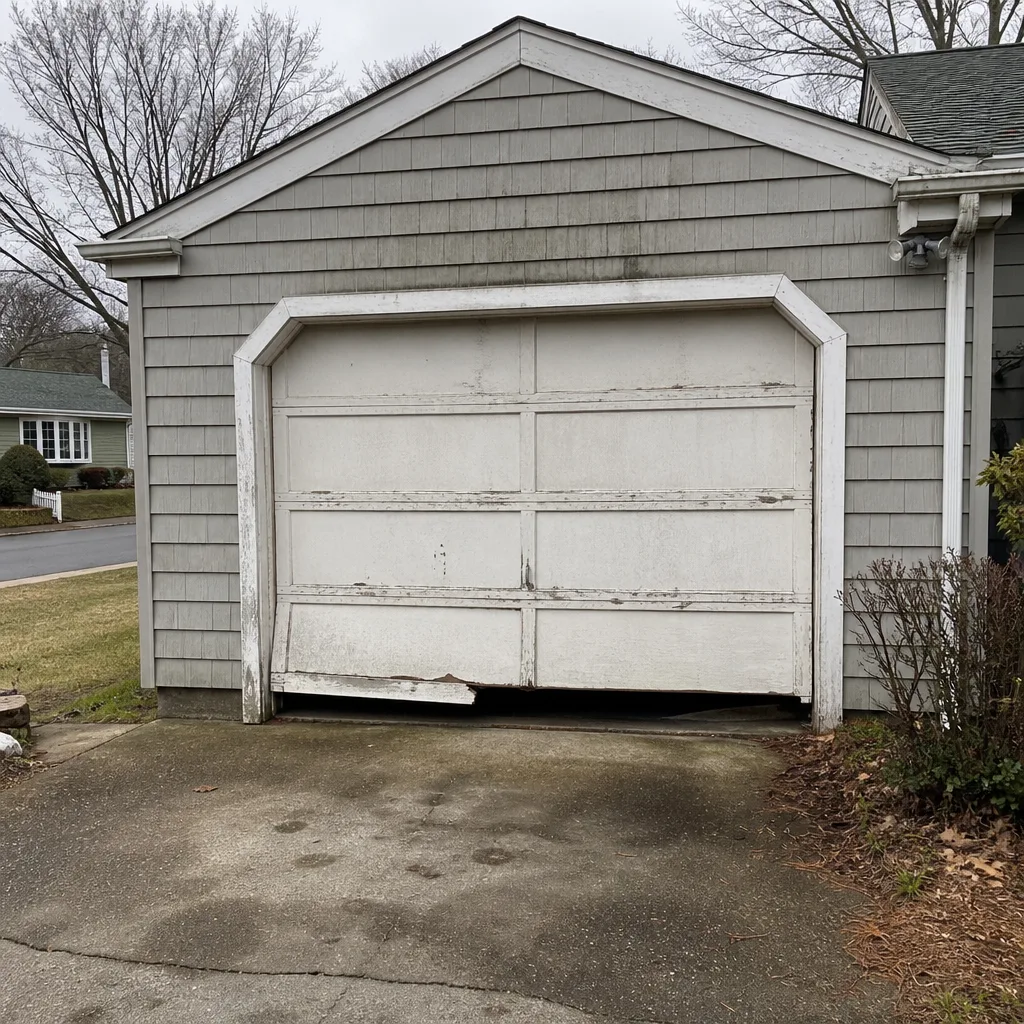
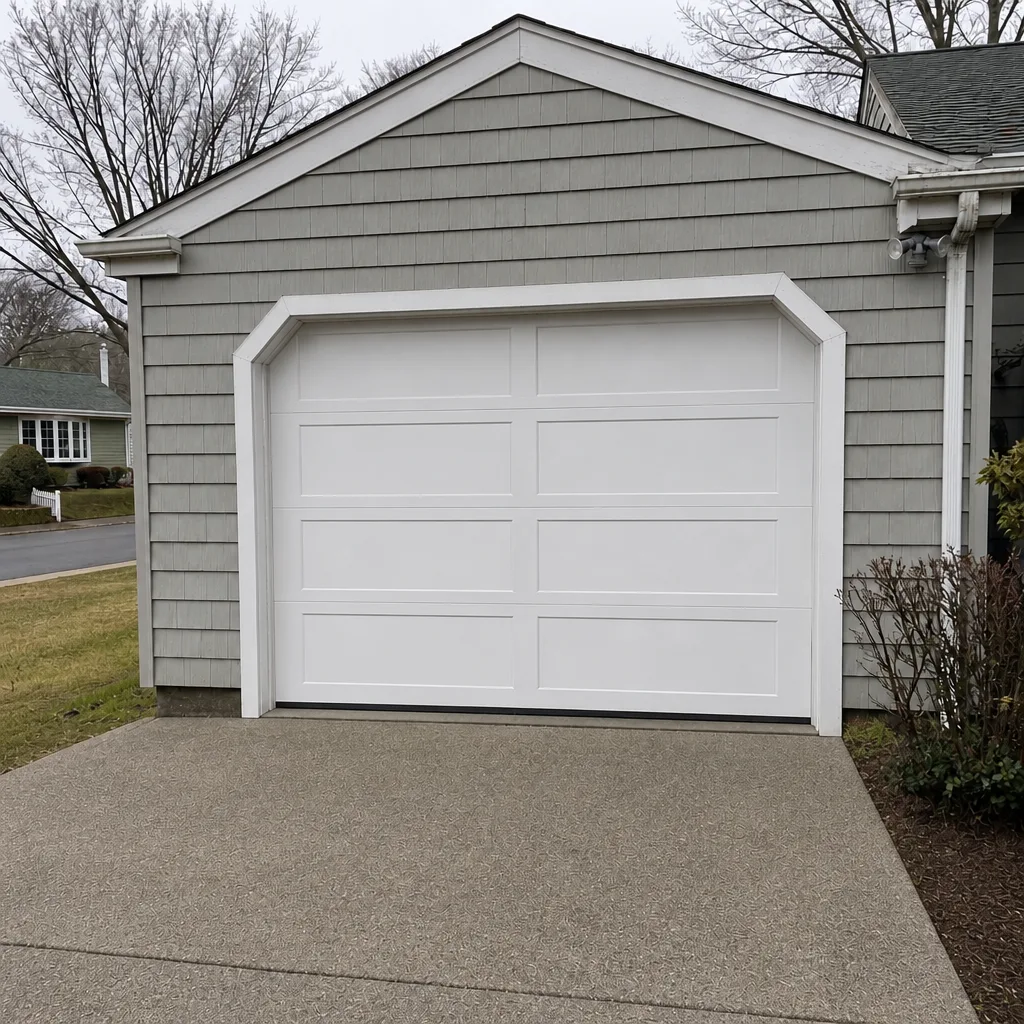
See the difference
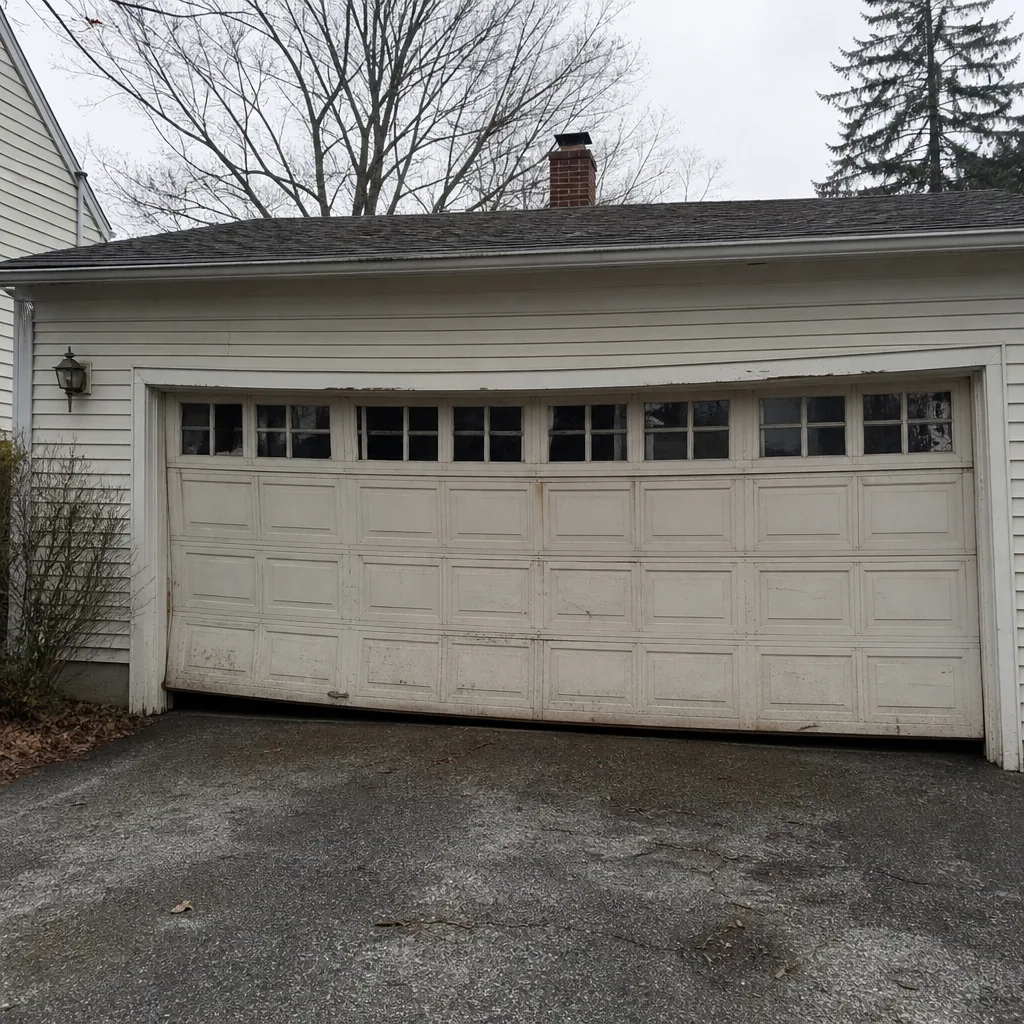 Before
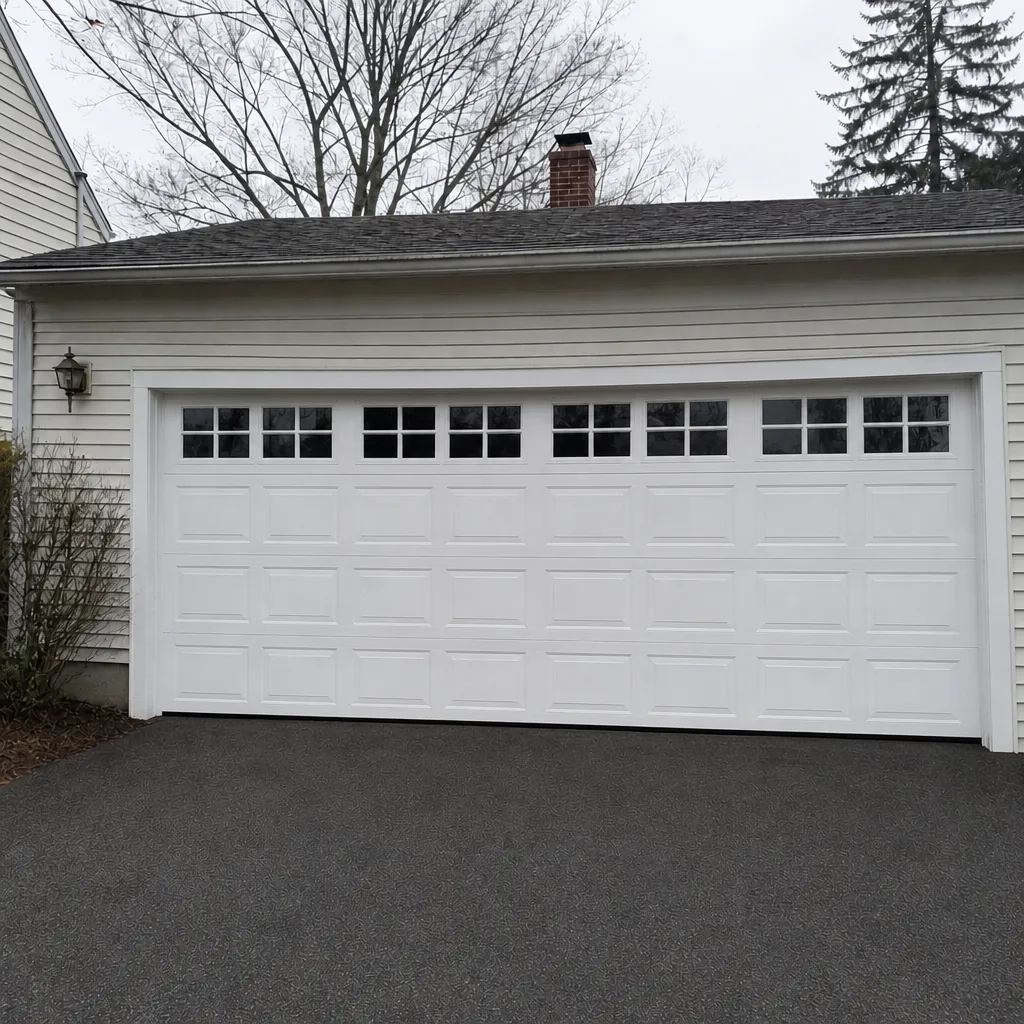 After
 Before
 After
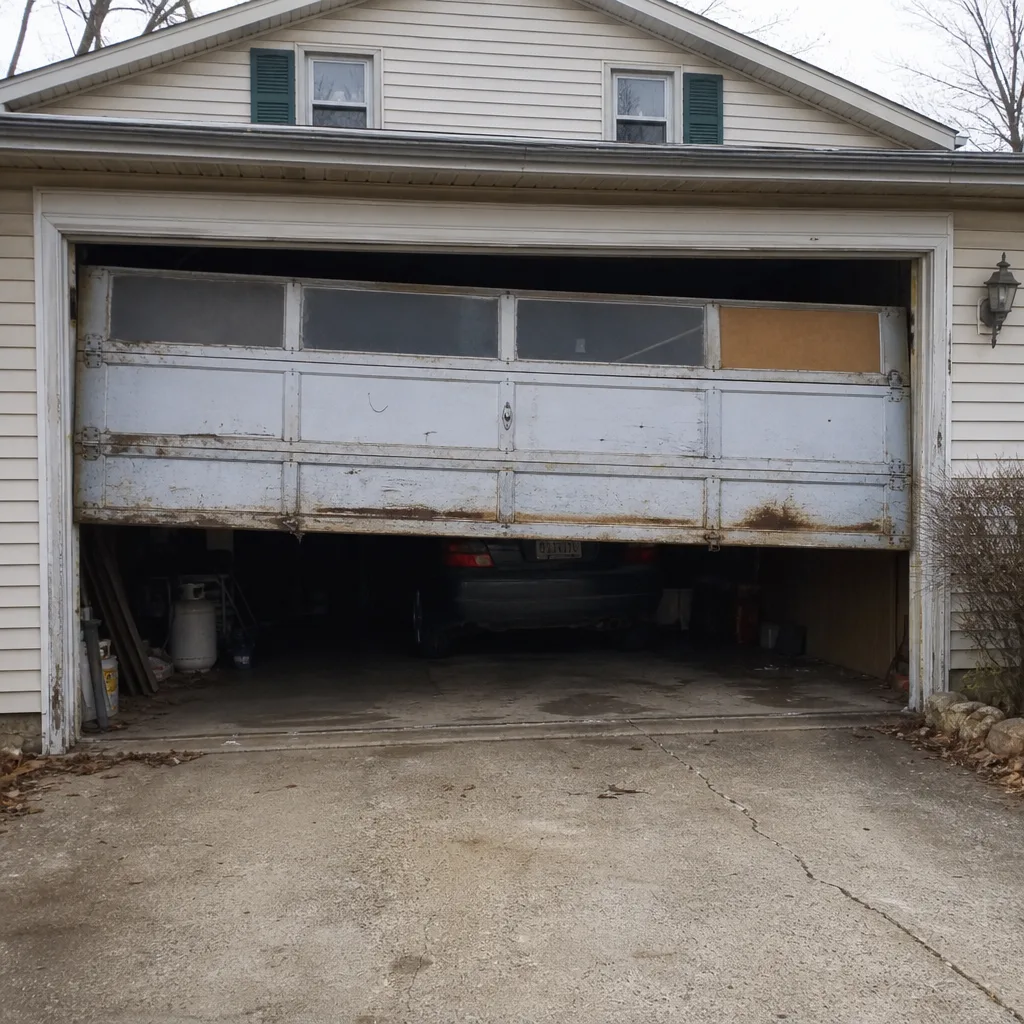 Before
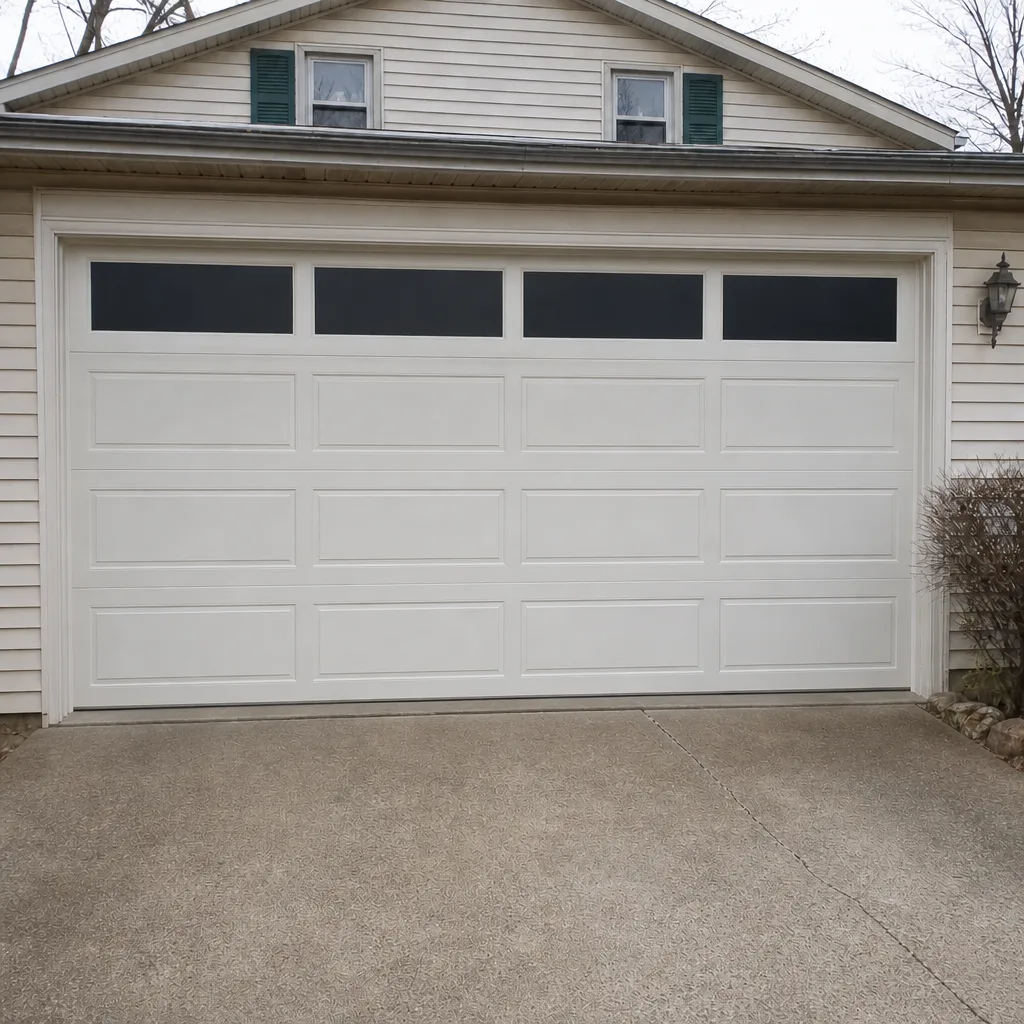 After
When to Call a Professional
Some door problems are genuinely a technician’s job. Call us if any of these fit:
- A spring is visibly broken, or the door won’t lift at all.
- A cable is slack, kinked, or visibly corroded.
- The door moves unevenly, slams down, or won’t stay up.
- The opener runs but the door doesn’t move, or the door reverses without a reason.
- The door is out of balance and pulling hard.
- You hear grinding, popping, or a loud crack during operation.
If a door fails on a Saturday, call and we’ll book a Sunday visit. We’re closed on Saturdays.
For a door problem on the spring, cable, or opener that’s been building for weeks, don’t wait for it to fail completely. Garage Door Repair Plymouth Pros offers free estimates in Plymouth – call (833) 754-9851 and we’ll diagnose first, quote before any work, and get you back to working the same day for repair calls. Our technicians have up to 14 years of experience across all eight of the most common brands, and we handle the door, the opener, and the spring under one call.
Frequently Asked Questions
Most Plymouth garage door repairs fall between roughly $90 and $400 depending on the part – spring, cable, seal, rollers, or opener component. Spring replacement runs $180 to $340 for a single spring, and a matched pair costs roughly double that. Call (833) 754-9851 for an exact quote – estimates are free.
For repair calls, yes, same-day service is often possible when you call early, and we dispatch quickly through our operating hours. If the door has failed on a Saturday, call and we’ll book the next available visit, since we’re closed Saturdays. Call (833) 754-9851 and we’ll find the soonest slot.
No. We diagnose before we quote, so the number you agree to is the number you pay for that repair. If the diagnosis turns up a bigger underlying problem – a bent track under a failing opener, say – we tell you before any work and quote the revised job. You approve it or you don’t.
The local professionals we connect you with are licensed and insured as their state requires and work on garage door systems exclusively. We don’t send a generalist. Call (833) 754-9851 with your door and opener brand and we’ll match the right technician.
Yes – salt-laden air accelerates corrosion on high-tension springs and cables, and combined with the freeze-thaw cycles here, parts wear noticeably faster than they would inland. Homeowners near the coastline should inspect springs and cables yearly rather than every few years. Call (833) 754-9851 if you want a technician to check them.
Permit requirements for garage door work vary, so ask the city’s building department directly about your project before any large job. For straightforward repairs like springs, cables, and openers, no permit is usually involved. Call (833) 754-9851 and we’ll tell you what your repair involves.
The Bottom Line
Plymouth’s climate and housing stock create wear patterns you won’t find in generic garage door guides: bottom seals and cables go first, springs suffer from corrosion fatigue, and brand familiarity matters because most doors only need repair, not replacement. Repair-first, done with the right diagnostic and matched parts, extends the life of a sound door for years. The decision points are straightforward: investigate seal, cable, and spring condition before each winter, treat any spring or cable failure as a same-day technician call, and get a quote after a diagnosis, not before. When it’s time, call (833) 754-9851 for a free estimate from Garage Door Repair Plymouth Pros.
Written by the team at Garage Door Repair Plymouth Pros.